

The true wireless earbud market is more competitive than ever. Amidst the fierce competition, Samsung's Galaxy Buds lineup – once a serious contender to Apple's AirPods – is gradually losing ground. After the underwhelming release of the Galaxy Buds 3 and Buds 3 Pro, many are wondering: can Samsung regain users' trust?

This article dives into the mistakes made with the Buds 3 series and lays out 5 specific directions for how the Galaxy Buds 4 can stage a major comeback and compete head-on with top rivals like the AirPods Pro 2 and Sony WF-1000XM5.
1. Galaxy Buds 3 and 3 Pro – Big expectations, disappointing reality
The Galaxy Buds 3 series was marketed as a design and feature overhaul. However, reactions from tech reviewers and users alike were lukewarm at best. Many felt the new models were a step backward in both design and performance.

Despite integrating AI features and Galaxy AI support, the earbuds were plagued with basic issues: inconsistent noise cancellation, lag when switching devices, discomfort during long wear, and a price tag that felt unjustified.
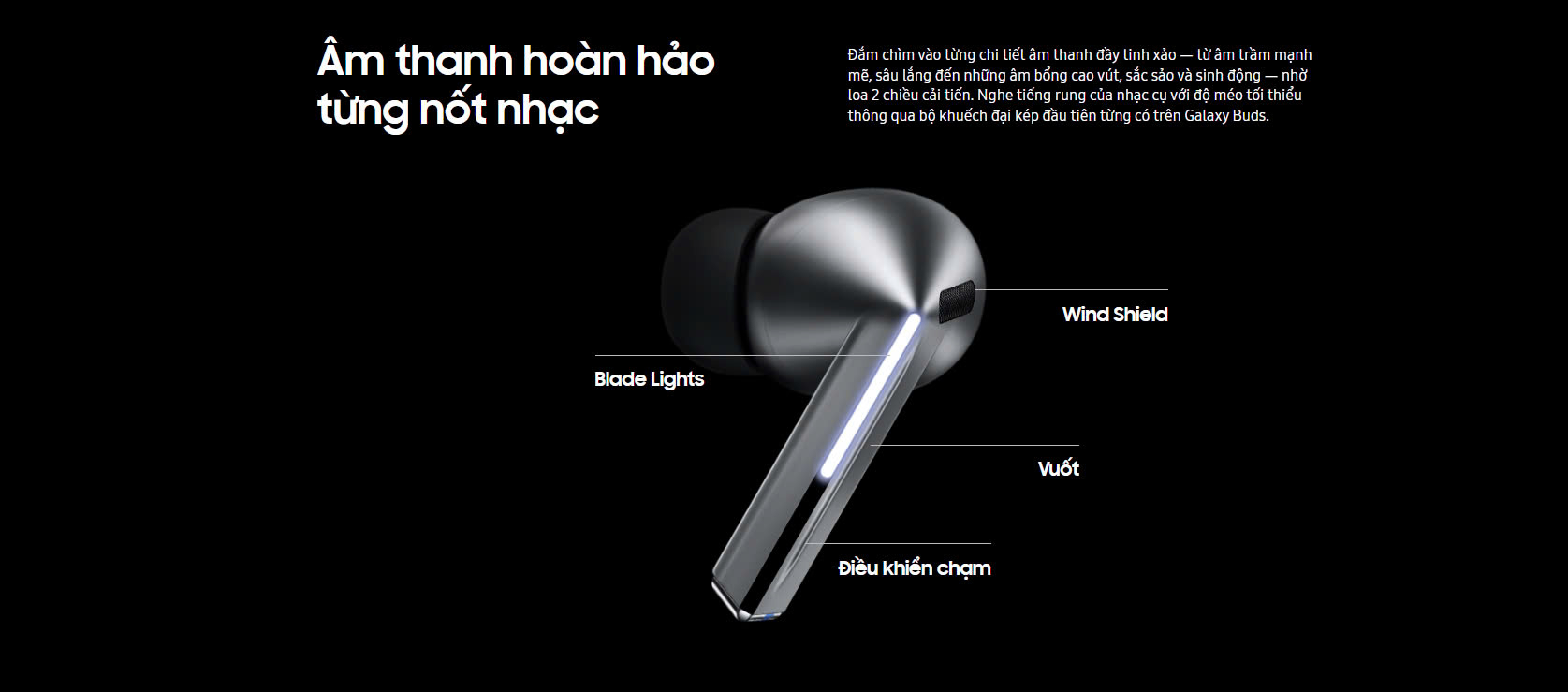
Worse still, Samsung’s decision to adopt the AirPods-style stem design sparked criticism, with many feeling the brand had lost its identity.
Without serious changes, the Galaxy Buds 4 may well follow in the footsteps of Jabra and exit the consumer earbuds business entirely.
2. Double down on AI — no need to outsmart ChatGPT, just do better than Siri
Samsung began incorporating AI into the Buds 3 lineup, but the results were far from flawless. Features like voice detection, real-time translation, and environmental sound detection still need significant refinement.

To win back users, Samsung needs to develop a strong, practical AI experience that:
Instantly translates conversations during travel or meetings
Automatically adjusts sound modes based on context (e.g., commuting, running, resting)
Provides a reliable and intuitive Bixby voice assistant experience
Samsung doesn’t need to build the next ChatGPT — it just needs to create an assistant that’s genuinely helpful in everyday scenarios and smarter than Siri.
3. Bring back the original, comfortable design
The stemmed design of the Galaxy Buds 3 was not the flex Samsung thought it would be. While features like touch strips and pinch controls added novelty, they lacked the polish of the AirPods Pro 2.

By contrast, the Galaxy Buds 2 Pro showcased Samsung’s own design language — compact, sleek, comfortable. The pill-shaped case was one of the smallest on the market and impressively portable.
The Buds 4 should take inspiration from that success and focus on:
Ergonomic, discreet design
Great passive noise isolation
Comfortable wear for hours
In short: Galaxy Buds 4 needs to feel more like a sequel to the Buds 2 Pro, and less like a knockoff of AirPods.
4. Drop mid-tier models — focus on a killer flagship
Launching both Buds 3 and Buds 3 Pro at different price points was a strategic misstep. In a crowded market, mid-range buds often get ignored as users either go premium or seek value models.

Samsung should focus its resources on one truly outstanding flagship, not two diluted options.
This approach allows for:
Better allocation of R&D resources
Stronger branding and messaging
A clearer identity in the premium earbud market
Sony and Bose have thrived with a single flagship model. Samsung should do the same.
5. Make 360 Audio and SSC codec work across all devices
Samsung’s audio tech is some of the best out there. 360 Audio offers immersive spatial sound, while SSC (Samsung Scalable Codec) dynamically adjusts bitrate for rich, high-fidelity playback.
But currently, both features are locked behind Galaxy-only compatibility.
While ecosystem exclusivity might make sense on paper, it hurts adoption. Google allows Pixel’s spatial audio to work with all headphones — Samsung should follow suit.
If Galaxy Buds 4 supports these features across Android, iOS, and macOS devices, it could be a game-changer.
6. Rethink pricing – value must match perception
AirPods Pro 2 are regularly on sale for $169, far below their $249 MSRP. Meanwhile, Galaxy Buds 3 Pro launched at $249 — making them a tough sell.
To compete, Galaxy Buds 4 should launch at $150–$200, positioning them as the smarter choice for those who want flagship quality without paying Apple prices.
Moreover, Samsung is known for slashing prices within weeks of launch. Why not price the Buds 4 right from the start and build momentum with confidence?
7. The hope for Galaxy Buds 4: A true revival or final farewell?
To make a real comeback, Galaxy Buds 4 must deliver:
Refined, compact design
Improved ANC performance
Broad compatibility (not just for Galaxy users)
Better battery life (8+ hours per charge)
Smart, helpful AI — not just gimmicks
Reasonable, competitive pricing
Final Thoughts
The Galaxy Buds once stood proudly among the best wireless earbuds on the market. But in recent years, they’ve struggled to maintain relevance due to confusing product decisions and missed opportunities.
The Galaxy Buds 4 is not just another product launch — it could be the last chance for Samsung to reclaim its place in wireless audio. If Samsung listens to users, learns from the past, and delivers real innovation, the Buds 4 could mark a powerful return to form.
But if not, this could very well be the end of the line.
SEO Keywords:
#GalaxyBuds4 #SamsungEarbuds #TrueWirelessEarbuds #AirPodsProCompetitor #WirelessAudio #ANCHeadphones #BluetoothEarbuds #GalaxyAI #IkigaiTeck #TechNews #GadgetReview #AudioTechnology #PhanMemMienPhi #UngDungPhanMem #CongNgheMoi